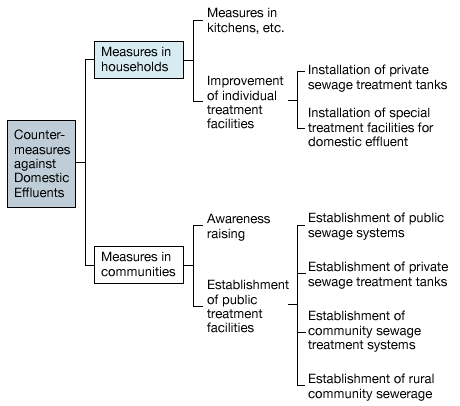
Effluents from domestic activities such as cooking, washing, and bathing are a major cause of pollution of public waters. Therefore, the Ministry of the Environment specifies the provisions in the Water Pollution Control Law for promoting comprehensive countermeasures against domestic effluents, as follows.
(1) Clarification of administrative responsibility for countermeasures against domestic effluents.
These provisions mark that cities, towns and villages have been asked to participate in activities to enforce countermeasures against domestic effluents under the scheme of the Water Pollution Control Law. These municipalities are required to take the initiative in improving effluent treatment facilities as well as in educating residents about countermeasures to reduce the amount and impact of domestic effluents. At the same time, the prefectures are to coordinate the municipal countermeasures against domestic effluents on a broader scale while the central government is to disseminate related information and to support the local governments' countermeasures.
(2) Clarification of the responsibilities of citizens for to countermeasures against domestic effluents.
The stipulations of these provisions require the general public to dispose of food wastes, cooking oil, and other wastes properly and to use detergents appropriately. The general public is also required to cooperate with efforts by the central and local governments to maintain public water quality. People who discharge domestic effluents are requested to maintain their facilities for treatment in good order.
(3) Systematic promotion of countermeasures against domestic effluents.
As for systematic promotion, the Water Pollution Control Law stipulates that prefectural governor designates an area where it is necessary to implement counter measures against domestic effluents because of, for example excess of environmental quality standards, as the Area of Emphasized Countermeasures against Domestic Effluents. The municipalities in the area is stipulated to compile the Plan for Promotion of Countermeasure against Domestic Effluents about improvement of treatment facilities, dissemination of countermeasures and so on. The municipalities implement and promote the countermeasures under the plan.
(4) Extension of control to certain effluent generating facilities in areas subject to Areawide Total Pollutant Load Control.
On-site sewerage facilities for 201-500 persons were designated as “specified facilities in the specified areas” which are regulated only in the Areawide Total Pollutant Load Control Areas in order to extend effluent facility control.
In order to improve in policies to address domestic effluent problems, flexible infrastructure development of a variety of effluent treatment facilities appropriate for local conditions, e.g., public sewerage systems, sewage treatment tank, rural community sewerage systems for farming areas, community sewerage systems for urban areas and individual sewage treatment tanks is key to the solution. The other essential element of a successful strategy is the promotion of education to enhance the public's awareness of the problem and to facilitate voluntary pollutant load reduction. |