|
close |
|
|
 |
Restricted Zone for Protecting the Source of Water Supply in Bangkok Metropolitan Region1. Restricted Zone for the Protecting of the BMR Water Supply B.E. 2522 (1979) and 2531 (1988). The Cabinet decided to protect the source of the Bangkok Metropolitan Region (BMR) Water Supply by expanding the restricted zone of Samlae Catchment areas from 200 square kilometers to 350 square kilometers in accordance with the recommendations of NEB. This regulation requires that in the restricted zone, the building an expansion of factories which discharge wastewater containing toxic substances listed below or organic matter exceeding one kilogram of BOD per day, will not be permitted. The restricted zones are shown in Figure 5. The mention toxic substances include
Source: National Environmental Board (Cabinet Resolution, April 17, B.E.2522 (1979) and January 12, B.E.2531 (1988))
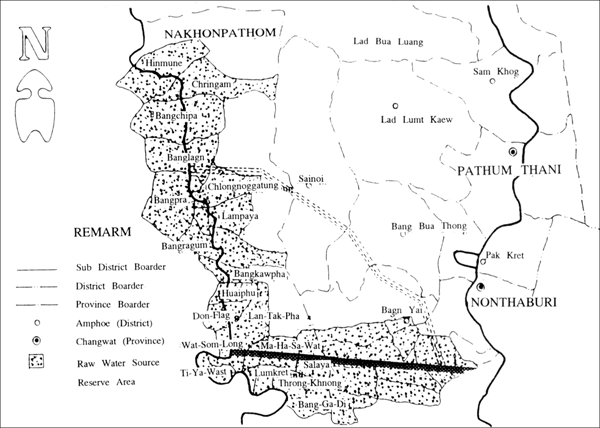
2. Restricted Zone for the Protecting of the BMR Water Supply at the Western part of the Chao Phraya River B.E. 2535 (1992). The cabinet decided to protect the sources of the Bangkok Metropolitan Region (BMR) Water Supply be expanding the restricted zone of the western part of the Chao Phraya River which effects water quality at Klong Mahasawas and the Thachin River which have an area of 458 square kilometers, on the recommendation of NEB. The areas covered Bangkok Metropolitan, Nonthaburi Province and Nakornpatom Province. The restricted zones are shown in Figure 6. The pollution sources control are as follow:
Source: National Environmental Board (Cabinet Resolution, February 11, B.E. 2535 (1992))
|
 |
|||||
|
|||||
|