1. Water pollution control through load-based pollutant management and
restoring Satoumi (bountiful sea) in Japan
2. Stakeholder consultation meeting of WEPA Action Program in Thailand
3. World Water Forum in Riyad, Saudi Arabia
4. Report on the Seminar on Decentralized Domestic Wastewater Management
in Lao PDR |
|
1. Water pollution control through load-based
pollutant management and restoring Satoumi
(bountiful sea) in Japan |
|
Enclosed water bodies have hydrological dynamics that are different from those of rivers, making them particularly susceptible
to influences such as land use, population and industrial structure within their catchment areas. Delays in addressing the pollution
issues in these areas make water quality improvements difficult and cause problems to persist. This is a global challenge.
In Japan, for example, water quality deterioration in enclosed water bodies became a critical issue, partly due to the impact of
the period of high economic growth since the 1950s.
Various policies and measures have been implemented to address this issue, including the enforcement of the Water Pollution Control Law
and the promotion of wastewater treatment infrastructure. Furthermore, in the late 1970s, the concept of a Total Maximum Daily Load
(TMDL) was introduced for specific bodies of water where improvement proved difficult. Unlike conventional effluent regulations
based on concentration, TMDL regulates effluent discharge based on pollution load. Currently, the formulation of the 10th Basic Policy
is underway. Although the TMDL program has significantly improved water quality, marine ecosystems have not returned to their pre-pollution
state, and the recovery of fishery resources remains challenging. Various regions are now undertaking initiatives to create "Satoumi"
(a bountiful sea), including the restoration of seagrass beds and tidal flats. Consequently, the TMDL program has shifted from
total load reduction to total load management.
This year, WEPA is implementing an Action Program in the Philippines, where a bountiful sea is essential, yet there are challenges
regarding water quality in enclosed water bodies. As part of this effort, and as a way to share the extensive experience in water quality
restoration, an online meeting was held on 15 January 2026 for the Department of Environment and Natural Resources -
Environmental Management Bureau of the Philippines (DENR-EMB) to provide information about Japan's "adaptive management process" and
long-standing experience in shifting from pollutant reduction to management. This meeting was supported by the International EMECS Center,
which has long been involved in restoration and management of enclosed sea areas. Participants included representatives from the Ministry
of the Environment, Japan (MOEJ), Dr. Yusuke Uchiyama of Kobe University (who chaired the Committee on Future Directions for Satoumi
Creation), Dr. Mitsumasa Okada (WEPA advisor), representatives from Hyogo Prefecture (which implements TMDL plans and Satoumi creation
activities), and Dr. Yusuke Nakatani from the University of Osaka (who has conducted research on controlling nutrient supply to coastal
waters and its impact on nori aquaculture). All experts provided crucial information on coastal zone management based on decades of
Japanese experience. Over 15 DENR-EMB participants joined the online meeting. During the Q&A session, questions were raised about
selecting facilities for regulation, interacting with industry during the regulatory process, the use of appropriate technologies,
how to divide roles between central and local governments, as well as what measures can be taken to tackle non-point source pollution.
Japan's approach to these matters was explained in detail.
|
|
2. Stakeholder consultation meeting of WEPA
Action Program in Thailand |
|
Under the WEPA Action Program in Thailand entitled “Development of Technical Guidelines on Pollution Loading Control Mechanisms for
Sustainable Management of River Basins in Thailand,” a stakeholder consultation meeting and field visits were conducted on 8 – 9 January 2026.
On 8 January, representatives from the Pollution Control Department of the Ministry of Natural Resources and Environment of Thailand
(PCD), the local implementing partner Sustainable Environmental Research Institution, Chulalongkorn University (SERI), WEPA Advisor
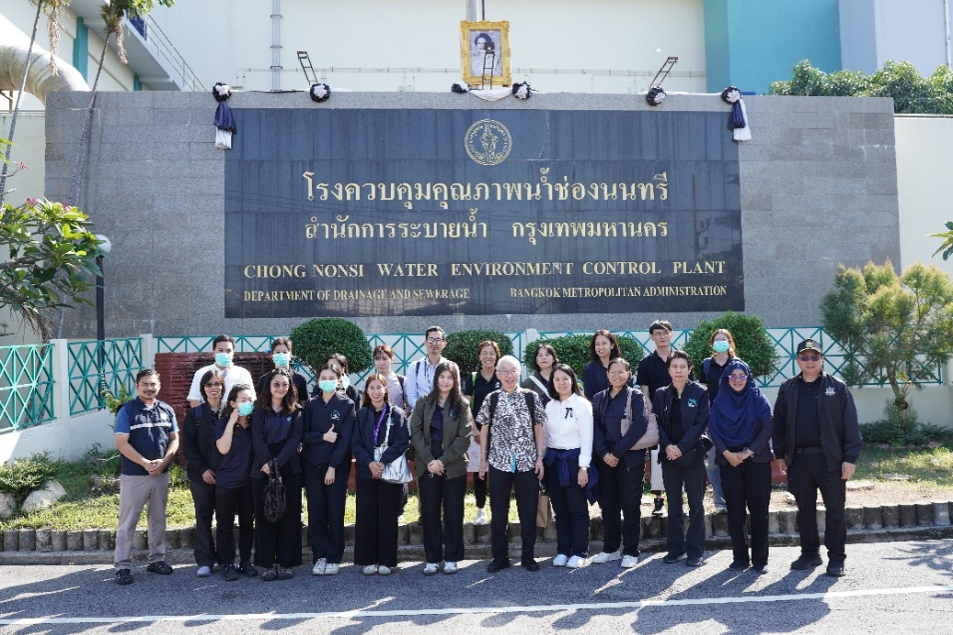
Prof. Tanaka, and the WEPA Secretariat conducted site visits to the Chong Nonsi Wastewater Treatment Plant (WWTP) and the Bon Kai
Community WWTP. During the visits, participants observed wastewater treatment operations and exchanged views on current institutional
arrangements and regulatory frameworks related to wastewater management.
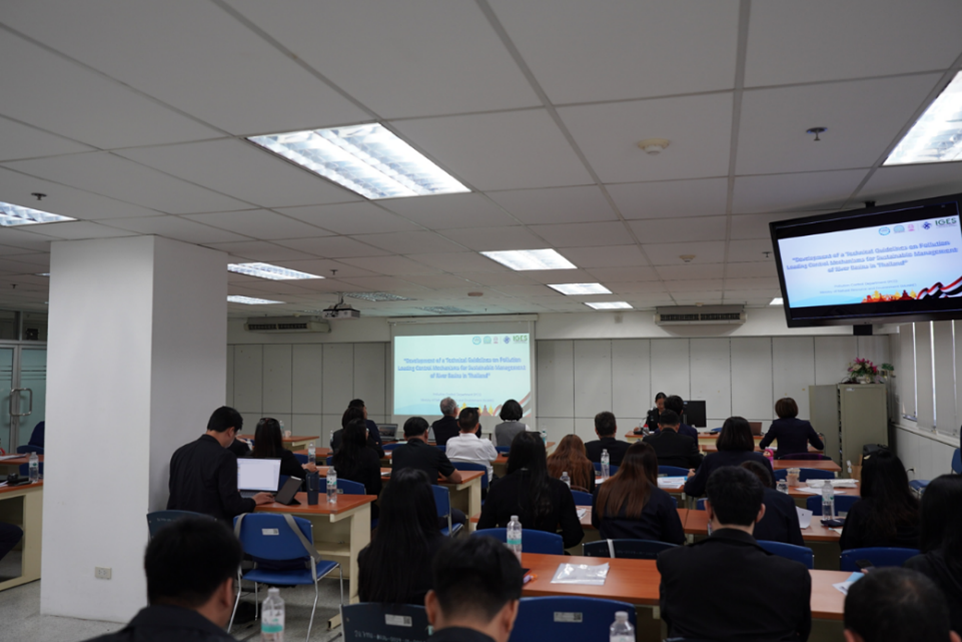
On 9 January, a stakeholder consultation meeting was held with key stakeholders from the Chao Phraya River Basin, which has been
designated as the pilot basin for the Action Program. Following an overview of the Action Program, progress on the development of
Technical Guidelines for pollution load control was presented. The presentation covered a review of Thailand’s existing legal and
regulatory framework for river basin management, the current status of water quality monitoring, and ongoing efforts to identify major
pollution sources. Participants shared a wide range of perspectives and insights on key water environment issues and priorities in the
basin. In addition, as part of the Action Program, related review work on Thailand’s Water Quality Index (WQI) was also shared during
the meeting.
|
|
|
Field visit to the Chong Nonsi WWTP, Bangkok (Photo: SERI) |
|
|
PCD providing an overview of the Action Program during the stakeholder consultation
meeting (Photo: SERI) |
|
|
3. World Water Forum in Riyadh, Saudi Arabia |
|
|
The 11th World Water Forum will be held in Riyadh, Saudi Arabia, from 22 to 28 March 2027, under the overarching theme
“Action for a Better Tomorrow.” The Forum will be structured around three interlinked processes: Political Process,
Thematic Process and Regional Process. Governments, international organizations, academia, civil society and other key
stakeholders will participate in a wide range of sessions to discuss pressing global water challenges and identify practical,
action-oriented solutions. The Thematic Process is organized around six core themes: (1) Water Security; (2) Water Finance;
(3) Water for Humans and Nature; (4) Water Governance and Diplomacy; (5) Innovation for Water Management; and (6) Value of Water.
The WEPA Secretariat has officially been participating in the Thematic Process, particularly under Theme 5: Innovation for Water Management,
with a focus on Topic 5E (Knowledge Sharing). Furthermore, members of the WEPA Secretariat are contributing to the development of
sessions and the preparation of concept notes for multiple other thematic working groups. The final session topics, titles, and
formats are expected to be confirmed around June 2026, following the 2nd Stakeholder Consultations and coordination within the Thematic
Process structure. Please feel free to check the
World Water Forum’s website for the latest updates.
|
|
4. Report on the Seminar on Decentralized Domestic
Wastewater Management in Lao PDR |
|
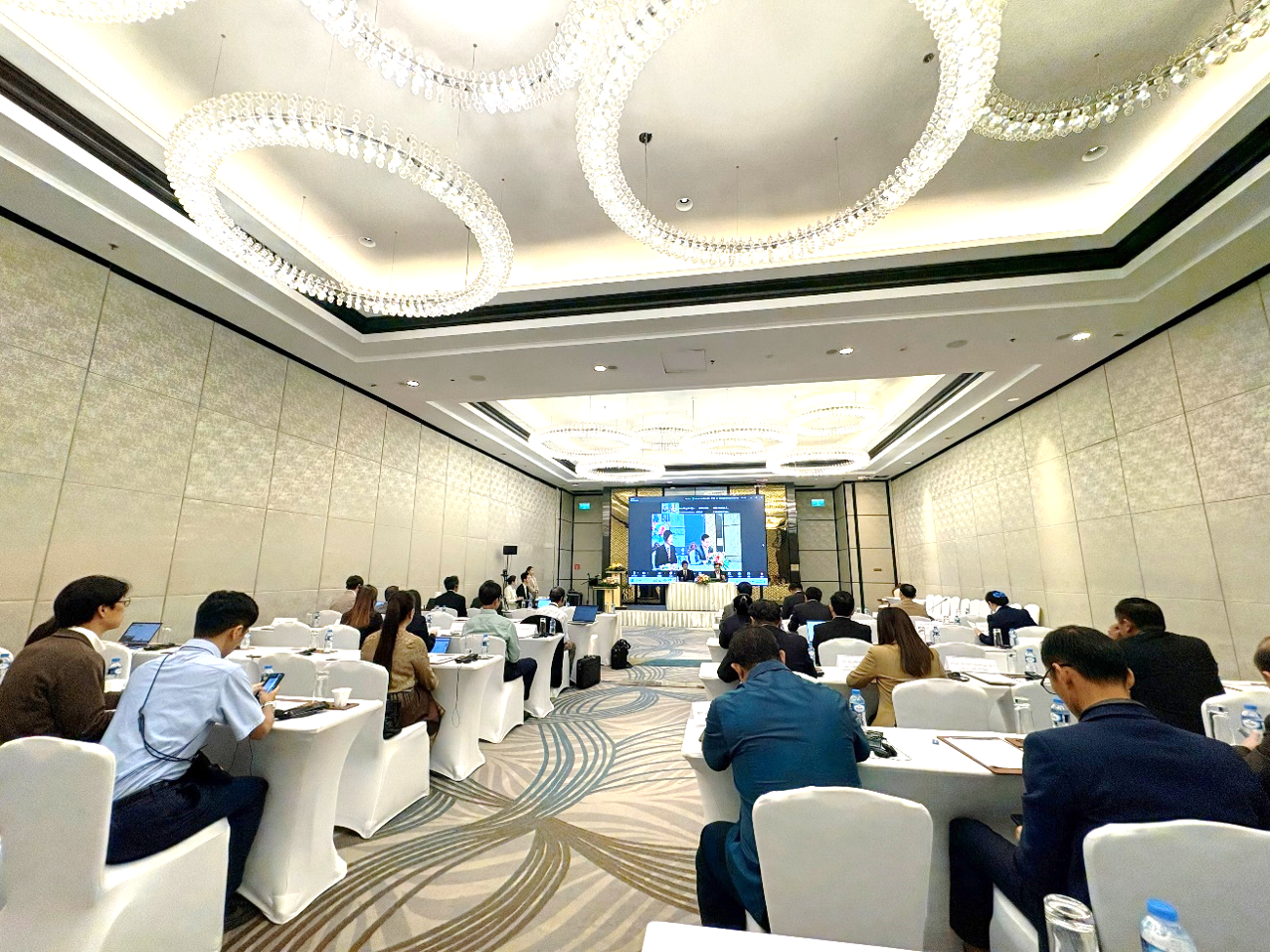
The Ministry of the Environment, Government of Japan (MOEJ), and the Ministry of Public Works and Transport, Government of Lao PDR
(MPWT), jointly organized the “Seminar Toward the Promotion of the Decentralized Domestic Wastewater Management in Lao People’s
Democratic Republic” in Vientiane on 10 December 2025. This seminar was held in a hybrid style, attended by representatives from
relevant ministries and agencies, as well as participants from research institutions, Johkasou manufacturers, and others.
The seminar provided information on a wide range of topics, including the current status of wastewater treatment in Lao PDR,
the country’s wastewater and environmental standards, and progress on compliance, as well as the history of wastewater treatment
in Japan and the legal framework on Johkasou. There was also a presentation introducing the activities of manufacturers in Japan.
The Ministry of Agriculture and Environment, Government of Lao PDR (MAE) shared various challenges facing wastewater management,
including seasonal water shortages due to fluctuations in water volume, insufficient human resources and technical capabilities
for wastewater treatment, budget constraints, and the environmental impacts of inadequate maintenance of septic tanks and sludge
management. Although environmental standards were established in 2009 and revised in 2017, there is still a lack of on-site compliance.
Specifically, it was reported that treated water from DEWATS and septic tanks often fails to meet the required standards.
Lao PDR is currently drafting new legislation on wastewater treatment, highlighting the urgent need to establish institutional
frameworks. This includes regulations for septic tank sludge management, setting sewage treatment fees, and securing maintenance costs.
It was also pointed out that achieving the national vision of 90% water access by 2030 presents significant challenges, requiring
essential measures such as securing budgets and developing human resources.
MOEJ introduced the historical background of water environment conservation efforts in Japan, and shared some initiatives to improve
water quality through the introduction of legal frameworks such as Johkasou Act. The presentation also set out the technical characteristics
and maintenance management systems of Johkasou, and the status of their deployment overseas. Following this, Johkasou manufacturers
explained the potential for developing Johkasou suited to local conditions, introducing energy-saving and low-cost models, and emphasizing
the importance of establishing maintenance management systems. Additionally, Japan Education Center of Environmental Sanitation (JECES)
presented the results of a demonstration test conducted in Luang Prabang City from 2020 to 2024, reporting that decentralized wastewater
treatment was effective to some extent in addressing increased wastewater loads in tourist areas.
The presentation from Lao PDR included participation from the Ministry of Agriculture and Environment (MAE), the WEPA Focal Point.
It featured an introduction to some of the results from field surveys conducted on decentralized wastewater treatment and on-site
wastewater treatment through the WEPA Action Program, as well as training materials developed based on these findings concerning
operation and management (Information on the Lao Action Program is available
here).
The panel discussion featured topics including combining centralized wastewater treatment in urban areas with decentralized treatment
in small-scale regions and tourist destinations; the use of both improved existing septic tanks and newly installed Johkasou; the need
for human resource development and maintenance management systems; and the necessity of sustainable fee structures.
This seminar provided a space for participants to share challenges and opportunities for improving wastewater management in Lao PDR,
as well as to strengthen cooperation among relevant agencies for future technical cooperation, and to confirm institutional development.
More detailed information about this seminar is available
here.
|
|
|
Seminar session on decentralized wastewater management |
|
|
Call for your contribution to WEPA News! (Please send us any updated information) |
|
|
We are seeking a cooperative agenda with partners. To ensure smooth progress, we welcome information on any new developments on water
environmental governance in your country. If you have any related information, please send it to the WEPA Secretariat by email
< WEPA_secretariat@iges.or.jp >.
|
|
|
|