|





|
||||||||||||||||
|
||||||||||||||||
 |
||||||||||||||||

|
||||||||||||||||
|
BackgroundThe use of pesticides against harmful pests in Cambodia has been growing significantly over the last few decades. The farmers thought that the utilisation of pesticides would improve crop yields. However, many investigations show that the increasing consumption of pesticides does not mean there is an increase in the production of basic food plants for poor people. Many different types of pesticide imported from overseas are easily found and bought at the markets. It is difficult for the farmers to read the labels of pesticides which are written in foreign languages, causing them not to use the pesticides properly. It is extremely dangerous for pesticides users and also the consumers of agricultural products who do not know of its effects on health. In addition, the farmers do not understand the concepts of the re-entry period or the pre-harvest interval to apply the pesticides, so that the farmers sprayed pesticides on the crops on the day of harvest. As a result, the residue level of pesticides remains high in fruits. A local NGO, the Cambodian Center for Study and Development in Agriculture (CEDAC) has conducted the pesticide survey and promoted public awareness within Tonle Sap catchment 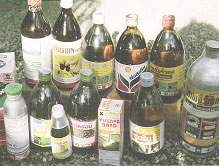 Picture 1: Available pesticides in Cambodia markets which the label of bottles are written in foreign languages
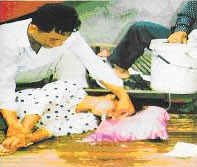 Picture 2: victim of pesticide poison
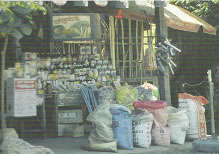 Picture 3: Free selling of agrochemicals in urban and rural areas of Cambodia
Objective of the Projecthe objectives of the project, Pesticide Pollution in Tonle Sap Catchments aimed to; (i) raise farmers’ awareness concerning the proper usage of pesticides within the Tonle Sap Catchments; (ii) contribute to the promotion of Integrated Pest Management practice; and (iii) contribute to the protection of human health and the environment through raising awareness of health problems caused by misusage of pesticides
ActivitiesThe project started in September 1999 and finished in September 2001. There were six provinces engaged in the programme: Kandal Province; Pursat Province; Kampong Chhnang Province; Battambang Province; Siem Reap Province; and Kampong Thom Province.  Table 1: Pesticide survey results at target areas surrounding Tonle Sap Lake
The survey was conducted in markets, in order to understand the pesticide market as well as to learn about the different areas, where pesticides and agro-chemicals are commonly used.  Picture 4: Trainers explained the health impact to farmers
There were 1,088 farmers from the selected 39 villages who participated in the workshop and short training course for awareness-raising programme of the harmful impacts on human health, the environment, and ecological farming. After learning at farmer class and follow-up visits, ninety three key farmers were selected from all target villages. These key farmers received advanced training on pesticide issues for one day.  Figure 1: Map of survey areas of pesticide uses
Note: The yellow parts were the areas using pesticide, survey Conducted by CEDAC  Picture 5: Regional pesticide dissemination course for provinces
OutcomesThrough this project, farmers gained a better understanding of the impact of pesticides on human health and the environment. They now use pesticide more carefully or store pesticide in containers. Approximately 40% of farmers who reported that they have already reduced the use of pesticide through: (i) reducing the number of products used per spray; (ii) reducing the frequency of pesticide use; (iii) using crops that are resilient to pests ; (iv) reducing the quantity of pesticides per spray; (v) using botanical pesticides; and (vi) increasing use of organic manure). A low percentage (5% to 12%) of farmers reduced the pesticide usage, and they have used the botanical pesticides instead of chemical pesticides. More than half (54%) of the farmers disseminated information related pesticides to other farmers. As a result, there were approximately 1,834 farmers who received information through farmer to farmer networks. The other project outcome was the compilation of the main report. The report was sent to the respective relevant organisations and individuals. Additionally, through seminars and meetings, the team also had opportunities to present the outcomes to other interested people.
Source:
1) CEDAC.Project progress report on Pesticide Pollution in Tonle Sap Catchment. September 2000
|


| pagetop |
| POLICIES | TECHNOLOGIES | NGOs & CBOs | SOURCES |
| Home | About WEPA | What's new | Activities | Definitions | Link | Sitemap | Contact Us |
|