1. 21st WEPA Annual Meeting and International Workshop in Malaysia
2. Site Visit in Malaysia
3. Striving for regulatory compliance: Efforts in Wastewater Management
4. Water Environment in Cambodia
5. Seminar: Toward the Promotion of the Decentralized Domestic Wastewater
Management in Lao People’s Democratic Republic |
|
| 1. 21st WEPA Annual Meeting and International Workshop in Malaysia |
|
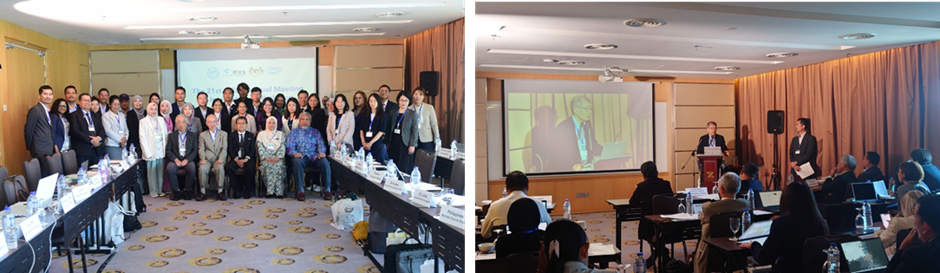
The 21st WEPA Annual Meeting and International Workshop were held on 8-9 September 2025 in Putrajaya, Malaysia. The event was organized by Malaysia’s
Ministry of Energy Transition and Water Transformation (PETRA), the National Water Research Institute of Malaysia (NAHRIM), the Ministry of the Environment, Japan (MOEJ),
and the WEPA Secretariat. The focus was on industrial wastewater management, highlighting relevant policies and their application across different industries.
The discussions underscored that maintaining surface water quality and improving regulatory compliance are critical priorities.
Focal Points from 13 partner countries, WEPA Advisory board members, experts, and officials from relevant agencies in Malaysia attended in person and online.
The Annual Meeting on the first day featured activity reports for FY2025 from the WEPA Secretariat and updates on the WEPA Action Programs, including the action program
in Thailand and the multilateral action program in Malaysia and the Philippines, followed by partner countries’ policy updates on their industrial wastewater management.
The International Workshop on the second day featured several comprehensive presentations by three experts. First, Mr. Teruyoshi Hayamizu from Japan introduced Japan's framework
for water pollution control, followed by Dr. Vicente Tuddao Jr. from the Philippines, who explained about the Philippine mining and quarrying industry. Finally, Mrs. Haslina binti Amer
from Malaysia spoke on the Zero Discharge Policy (ZDP) in the State of Selangor, Malaysia. Following the experts’ presentations, an interactive group discussion took place, and participants
were divided into three groups to discuss prioritized industries for regulation, strategies for managing unregulated small- and medium-sized enterprises, and mechanisms for ensuring compliance,
such as penalties and incentives. The workshop concluded successfully, fostering valuable knowledge-sharing and collaboration among attendees.
For more information and access to presentation materials, visit the WEPA website:
WEPA Annual Meeting and International Workshop. |
|
| 2. Site Visit in Malaysia |
|
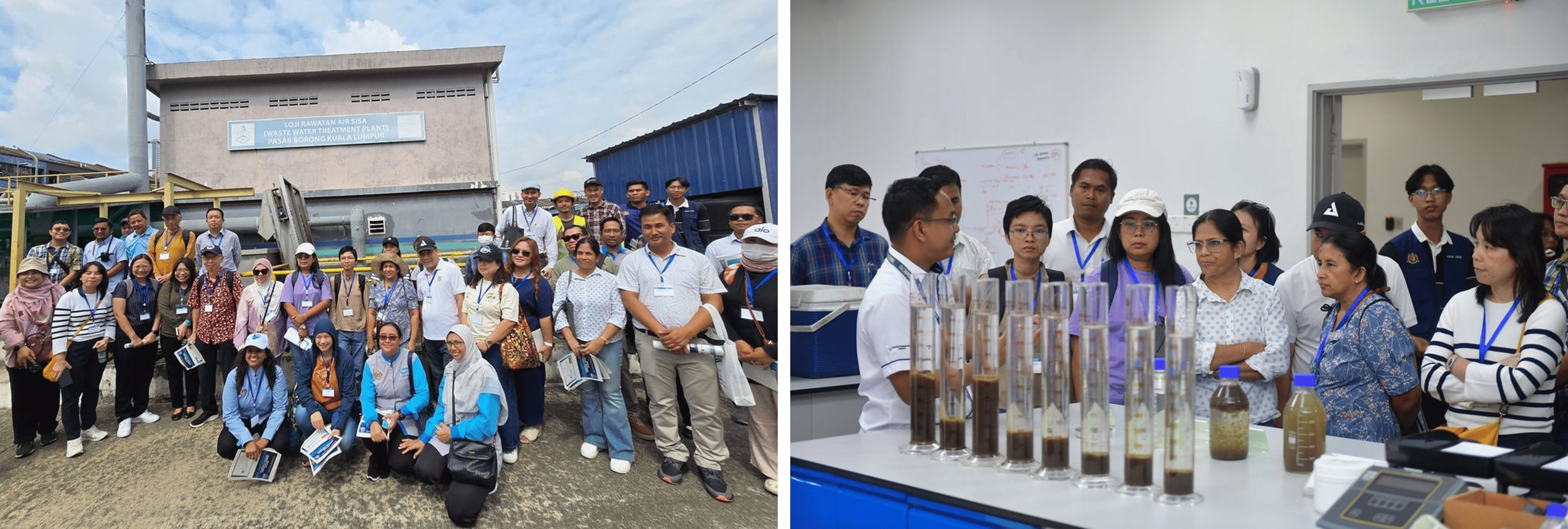
Following the 21st Annual Meeting and International Workshop, a technical tour on wastewater treatment plants was organized in coordination with PETRA and NAHRIM
on 10 September. In the morning, participants visited the Pasar Borong Wastewater Treatment Plant, which serves one of the largest wholesale markets in Kuala Lumpur.
The facility is managed by Dewan Bandaraya Kuala Lumpur (DBKL) and has a design capacity of 1,350 m3/day. The market's wastewater treatment process screens and removes
grease from raw water, then uses an aeration basin and a membrane bioreactor for biological treatment, ultimately producing discharged treated water and a dewatered sludge cake for disposal.
In the afternoon, participants toured the Indah Water Konsortium Langat Regional Sewerage Treatment Plant (RSTP Langat), which was designed and built based on the experience and success of
Tokyo Metropolitan Sewerage Services Corporation in Japan. Operational since 2022, RSTP Langat serves a population equivalent of about 600,000. The plant utilizes a “deep aeration” method which
greatly reduces sewage pollution in the Langat River and the risk of waterborne diseases from inadequately treated sewage.
The site visit provided participants with valuable insights into Malaysia's management of domestic and industrial wastewater. Through engaging discussions with the plant managers and staff,
the delegates learned about operational challenges and shared expertise from their respective countries, making the technical tour a rich knowledge-sharing experience.
|
|
|
3. Striving for regulatory compliance: Efforts in Wastewater Management |
|
|
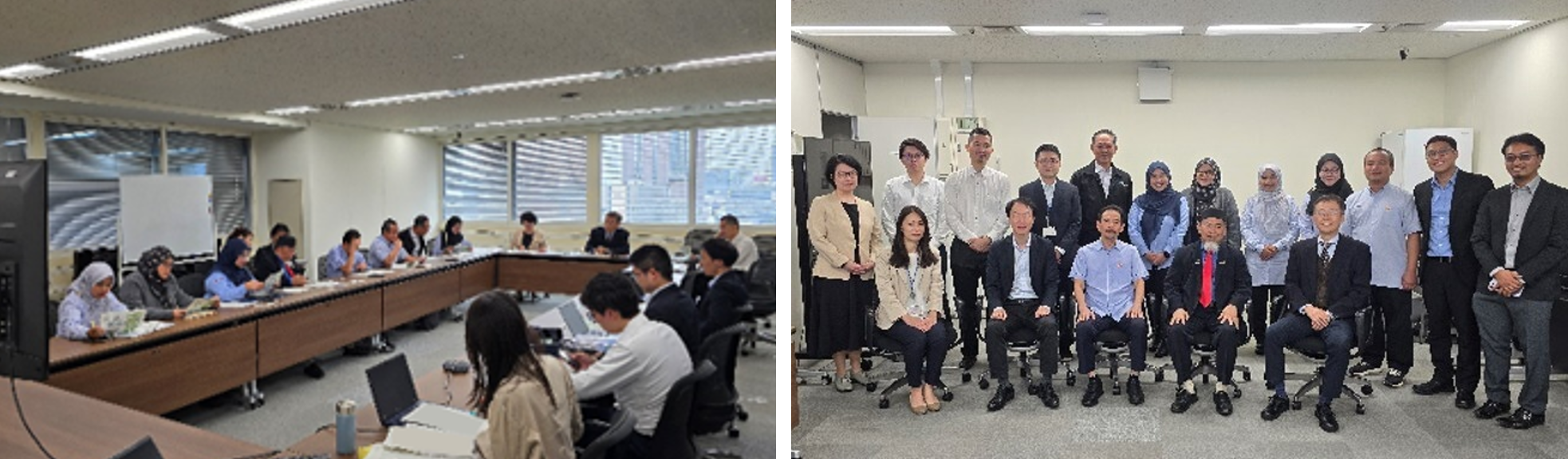
At the WEPA international workshop on 10 September 2025, the Selangor Water Management Authority (SWMA) presented its efforts to protect the water environment
in the state of Selangor through wastewater management. The state has been implementing the Zero Discharge Policy (ZDP) since 2024. Following the workshop, SWMA,
the National Water Resource Institute of Malaysia, MOEJ and the WEPA Secretariat exchanged views on improving compliance with regulations. To ensure the steady implementation
of the ZDP in Selangor, SWMA also held a meeting with MOEJ in Japan on 20 October, during which they gained a deeper understanding of Japanese wastewater management regulations
and technologies. During this meeting, MOEJ provided a detailed explanation of the Basic Environment Law and the Water Pollution Control Law function, as well as the roles of
each level of government. Participants also discussed topics such as more stringent prefectural standards. Following these explanations, a Q & A session was held to deepen
understanding of the regulations in Japan.
|
|
|
4. Water Environment in Cambodia |
|
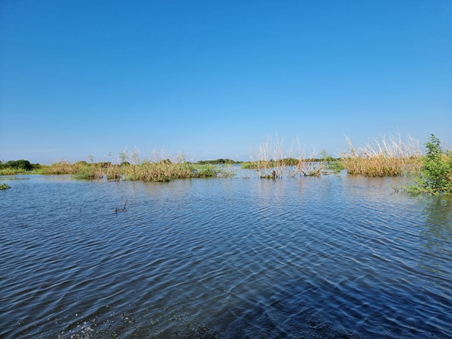
Cambodia has a diverse water environment woven from natural beauty, cultural heritage, and ecological significance. Mekong River, Tonlé Sap Lake,
and serene coastal areas collectively shape the country’s identity, economy, and daily life. Tonlé Sap Lake, Southeast Asia’s largest freshwater lake,
is a dynamic ecosystem that undergoes dramatic seasonal transformations. During the monsoon, it swells significantly, converting surrounding floodplains
into fertile grounds for agriculture and fishing, thereby supporting millions of Cambodians through food production, transportation, and trade. The lake's
floating villages—complete with homes, schools, and markets—offer a unique glimpse into a lifestyle intricately linked to water.
Flowing through Cambodia for nearly 500 kilometers, the Mekong River serves as a vital artery for biodiversity, irrigation, and hydropower. It connects
communities and sustains livelihoods across the country, where rice fields flourish along its banks, fish migrate, and cultural traditions thrive.
Beyond its role as a source of sustenance, the Mekong holds deep spiritual significance in Cambodian folklore.
Cambodia's coastal regions, particularly in provinces like Sihanoukville, Kampot, Kep, and Koh Kong, are rich in mangrove forests, coral reefs, and pristine beaches.
These ecologically diverse zones are increasingly popular for eco-tourism and sustainable development. Coastal fisheries and marine habitats not only provide food security
and economic opportunities but also serve as natural buffers against storms and erosion.
 However, the beauty and importance of Cambodia’s water environments face significant challenges that threaten their health and sustainability. Pollution from urban wastewater,
agricultural runoff, and industrial discharges has degraded water quality in lakes and rivers. During the dry season, this pollution intensifies, adversely affecting both human health
and aquatic life. Climate change exacerbates these issues; altered rainfall patterns can lead to droughts or flooding, disrupting agriculture and fisheries that depend on stable water levels.
However, the beauty and importance of Cambodia’s water environments face significant challenges that threaten their health and sustainability. Pollution from urban wastewater,
agricultural runoff, and industrial discharges has degraded water quality in lakes and rivers. During the dry season, this pollution intensifies, adversely affecting both human health
and aquatic life. Climate change exacerbates these issues; altered rainfall patterns can lead to droughts or flooding, disrupting agriculture and fisheries that depend on stable water levels.
Addressing these challenges necessitates coordinated efforts from the government, local communities, and international partners. Initiatives focused on enhancing water quality standards,
pollution control and monitoring, and restoring degraded ecosystems are essential for safeguarding Cambodia’s water environments. Education and community engagement are vital in cultivating
a culture of conservation that will ensure the longevity of these precious resources, while also sustaining healthy water environment and improving living standards and the economy.
Chandath Him and Say Vorng (Water Quality Management Division, Ministry of Environment, Cambodia, 25 September 2025)
|
|
|
5. Seminar: Toward the Promotion of the Decentralized Domestic Wastewater Management in Lao People’s Democratic Republic |
|
MOEJ and the Ministry of Public Works and Transport, Government of Lao People’s Democratic Republic (MPWT), will co-organize a seminar entitled
Toward the Promotion of the Decentralized Domestic Wastewater Management in Lao PDR on 10 December, 2025 in Vientiane.
This seminar will focus on decentralized wastewater treatment facilities, a key component of domestic wastewater treatment management, as well as
the measures and challenges related to their dissemination in Lao PDR. The seminar will be held in person, but participants can also join online.
If you would like to participate online, please contact the WEPA Secretariat at wepa_secretariat@iges.or.jp, and we will connect you with the seminar secretariat.
● Date & Time : 10 December, 2025, Lao time: 08:30~12:00, Japan time: 10:30~14:00
● Language: Lao / Japanese (with simultaneous interpretation)
● Program (tentative)
- Opening Remarks
- Current Situation of Wastewater Treatment in Lao PDR
- Effluent / Environment Standards and those Achievement in Lao PDR
- History and Current Status of Wastewater Treatment in Japan and Legal Framework
of Johkasou
- Japanese Johkasou manufacturers' activities in Lao PDR
- Panel Discussion
|
|
|
|
Call for your contribution to WEPA News! (Please send us any updated information) |
|
|
We are seeking a cooperative agenda with partners. To ensure smooth progress, we welcome information on any new developments on water
environmental governance in your country. If you have any related information, please send it to the WEPA Secretariat by email
< WEPA_secretariat@iges.or.jp >.
|
|
|
|