|





|
||||||||||||||||
|
||||||||||||||||
 |
||||||||||||||||

|
||||||||||||||||
|
Project Background and Objectives As a result, serious damage was caused to farmers and fishermen downstream and the government started undertaking the establishment of the Water Pollution Prevention Act and the relevant laws. However, they did not work well and water contamination became worse as the first priority was on industrial development in the period. Thereupon, the water contamination raised environmental awareness and necessity of an association foe a war against pollution among people downstream; and the Yahagi River Basin Water Quality Preservation Association was established in 1969 in cooperation with six agricultural organisations, seven fishery organisations and five cities.
Project Abstract and Effects of Project
In around 1974, economic development was slowed down due to the oil crisis and environmental awareness prevailed; so that legal provision against environmental problems was accelerated. The association started its next activity, which was the promotion of interchanges, education and enlightenment toward mutual understanding between the upstream and downstream people, who had been in conflict. Besides, the association undertook the establishment of its supporting group. The supporting group patrolled liquid waste from plants and development sites as well as holding workshops on environmental problems. The association’s efforts bore fruit. In 1977, it was provided by the Aichi government that large-scale development projects needed consent of the prefectural government. Then, the association’s activities were directed toward guidance to ethical and sound development. In 1985, guidance: ‘Seeking for Orderly Development’ was established and rules on development order were decided. In addition, original countermeasures against outflow of earth and sand to prevent water deterioration due to development works. In 1983, the association also guided large-scale-project developers to conduct environmental assessment and hand in reports on it. These activities for water quality conservation are called the ‘Yahagi River Method’ and it has taken root as one of basin management methods which actively involve people.
Distinctive Features of Project (Factors and Keys to Success)
A lot of construction companies in the area have wholly cooperated with the Yahagi River Method. Studies on a device against turbid water have been done by technical experts in companies and some companies have started equipping the device. It can be said that the cooperative efforts of the companies have contributed to the success of water purification. In 2000, the Ministry of Construction announced a policy for water quality conservation in cooperation with NPO as one of the important ones. It also evaluated the Yahagi River Method as a ‘forerunner of favourable river administration’. Relevant Websites
References
|


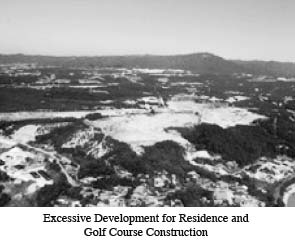 Liver Yahagi, running through the middle of Aichi prefecture, is
122km long and 1,830km² in area with a population of 1,300,000 in the
basin. Excessive industrialisation due to rapid economic development
in the 1960’s caused water contamination in Liver Yahagi and it
became a huge social problem. Gravel and kaolin dealers cut through
mountains upstream and discharged sludge, and many companies in the
auto industry and others discharged liquid waste. What is worse, excessive
development in the mountains upstream caused deforestation and that
led to wash-away of topsoil and accumulation of sludge on the riverbed.
Liver Yahagi, running through the middle of Aichi prefecture, is
122km long and 1,830km² in area with a population of 1,300,000 in the
basin. Excessive industrialisation due to rapid economic development
in the 1960’s caused water contamination in Liver Yahagi and it
became a huge social problem. Gravel and kaolin dealers cut through
mountains upstream and discharged sludge, and many companies in the
auto industry and others discharged liquid waste. What is worse, excessive
development in the mountains upstream caused deforestation and that
led to wash-away of topsoil and accumulation of sludge on the riverbed.  In the early stage of its activities, social priority was still on economic development
and law provision against water contamination was rather insufficient. Thus,
the association could not depend on the government and had no choice but to work
steadily and independently. For example, when a company discharging waste was
found, the association appealed directory to the company not to do that. It also
conducted steady investigation into the actual water-quality condition. In addition,
it accused three gravel dealers in 1972, making use of the data collected and
the Water Pollution Prevention Act.
In the early stage of its activities, social priority was still on economic development
and law provision against water contamination was rather insufficient. Thus,
the association could not depend on the government and had no choice but to work
steadily and independently. For example, when a company discharging waste was
found, the association appealed directory to the company not to do that. It also
conducted steady investigation into the actual water-quality condition. In addition,
it accused three gravel dealers in 1972, making use of the data collected and
the Water Pollution Prevention Act. The Yahagi River Basin Water Quality Preservation Association has
been supported by many groups such as the Yahagi River Basin Development
Research Association and the Yahagi River Cleaning Association. In 1882,
27 cities and towns in the basin also became supporting groups and 52
groups have supported the Yahagi River Basin Water Quality Preservation
Association so far (strictly, there have been 38 groups supporting the
association because of mergers of local autonomies).
The Yahagi River Basin Water Quality Preservation Association has
been supported by many groups such as the Yahagi River Basin Development
Research Association and the Yahagi River Cleaning Association. In 1882,
27 cities and towns in the basin also became supporting groups and 52
groups have supported the Yahagi River Basin Water Quality Preservation
Association so far (strictly, there have been 38 groups supporting the
association because of mergers of local autonomies).| pagetop |
| POLICIES | TECHNOLOGIES | NGOs & CBOs | SOURCES |
| Home | About WEPA | What's new | Activities | Definitions | Link | Sitemap | Contact Us |
|