
Lao PDR
Last Updated : 22 April 2025.
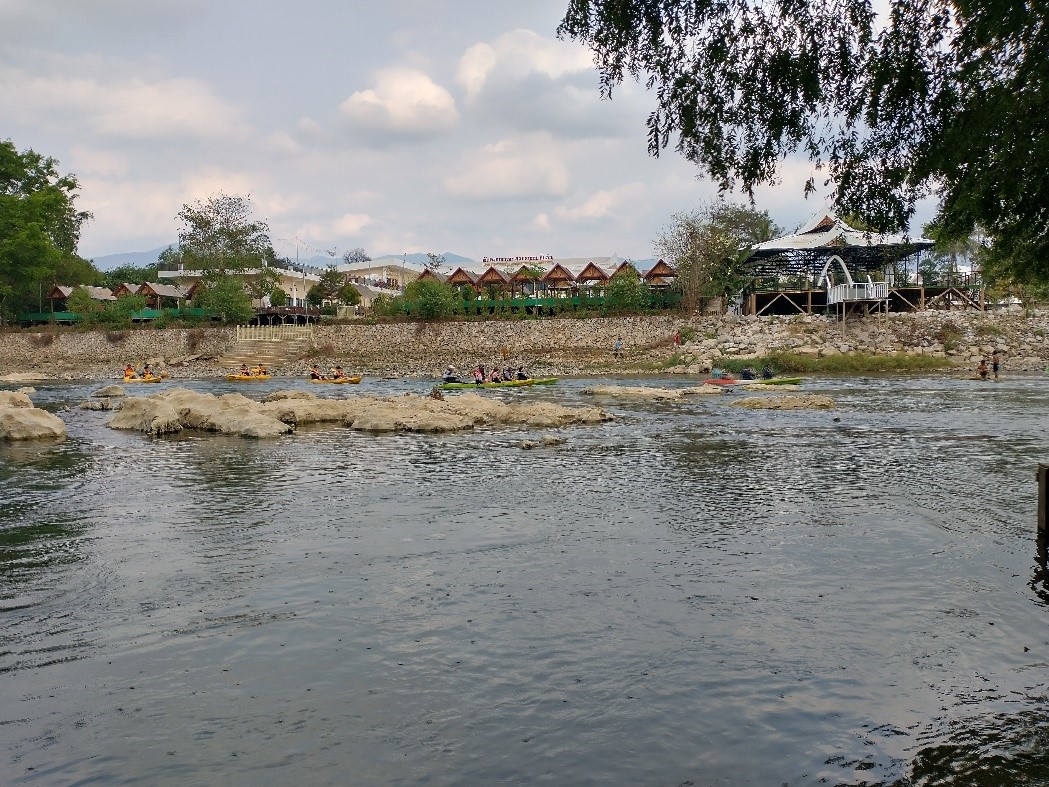
Lao PDR has rich water resources. Average annual rainfall at higher elevations in the southern part of the country is around 4,000 mm and in the northern valleys is around 1,300 mm. With a population of approximately 7.12 million, per capita annual water availability is around 55,000 m³, the highest of the WEPA partner countries.
State of water environment
Lao PDR has rich water resources. The average annual rainfall at higher elevations in the southern part of the country is around 4,000 mm and in the northern valleys is around 1,300 mm. With a population of approximately 7.12 million, per capita annual water availability is around 55,000 m3, the highest of the WEPA partner countries. Despite this, water supply capacity is limited due to the country’s inadequately developed water infrastructure (MONRE 2019). Annual water consumption in Lao PDR is 4.26 million m3 , which accounts for 1.3% of total renewable freshwater resources. Of the total water usage, industry consumes 4%, domestic 3.1% and agriculture 93%.
As with other Southeast Asian countries, seasonal distribution of water resources is uneven in Lao PDR – about 80% of annual precipitation occurs during the rainy season (May to October) and 20% in the dry season (November to April). In the dry season, flows of the Se Bang Fai, Se Bang Hieng and Se Done Rivers that run through the central and southern parts of the country drop to 10–15% of the annual average.
There are 62 main river basins in Lao PDR (MONRE 2019), a country with 90% of its territory within the Mekong River basin. The Mekong tributaries contribute the equivalent of 35% of the average annual flow and account for 25% of the catchment area of the basin (MRC 2005). In 2015, 71% of the population was using improved sanitation, while 76% had access to improved drinking water sources (WHO 2017).
Please read: Outlook 2024 Lao PDR
Legal framework
Laws on Water Resources Management (2007)
stimulating the effective and sustainable management of the water resources to attain socio-economic development and the welfare of the people
Laws on Environmental Protection and Natural Resources Management (1996)
- Sub-decree on Water Pollution Control (April 6, 1999)
- Sub-decree 103 on the amendment of Sub-decree 27 on Water Pollution Control (June 29, 2021)
- Sub-decree on Environmental Impact Assessment (August 11, 1999)
- Environmental Code and Natural Resources (June 13, 2023)
- Sub-decree on Solid Waste Management (April 27, 1999)
- Sub-decree on the Management of Sewage and Wastewater Treatment System (December 25, 2017)
Institutional Arrangement
Key institutions for environmental protection, surface water resources and wastewater management
| National level | Roles of subnational government |
| Ministry of Natural Resources and Environment (MONRE) is responsible for the protection of natural resources, including water. | Department of Natural Resources and Environment (DONRE, Province) is responsible for monitoring. |